https://zapptechelectrical.com.au/electrician-in-windsor/
Finding a reliable electrician in Hawkesbury doesn’t have to be stressful. Whether you’re dealing with a tripped circuit, planning a renovation, or need a safety inspection before selling your home, knowing what to look for, what to pay, and when to call can save you time, money, and real risk.
Key Takeaways
- Licensed electricians in NSW must hold a valid electrical contractor licence issued by NSW Fair Trading.
- Electrical faults cause approximately 40% of house fires in Australia (Fire and Rescue NSW, 2023).
- The Hawkesbury region spans rural acreages, heritage properties, and new estates, each with distinct electrical needs.
- Always request a written quote and check your electrician’s licence number before work begins.
- Safety switches (RCDs) are compulsory on new installations and strongly recommended on all older homes.
What Electrical Services Do Hawkesbury Residents Actually Need?
Hawkesbury homeowners face a unique mix of electrical challenges. According to the Australian Bureau of Statistics, the Hawkesbury local government area covers more than 2,800 square kilometres, blending semi-rural acreages, heritage sandstone cottages, and modern suburban estates (ABS Regional Population, 2022). That diversity means electrical needs here differ significantly from inner-city suburbs. Older homes often run on outdated wiring, while new builds require compliance with the latest Australian Standards.
The most common services requested in the Hawkesbury area include:
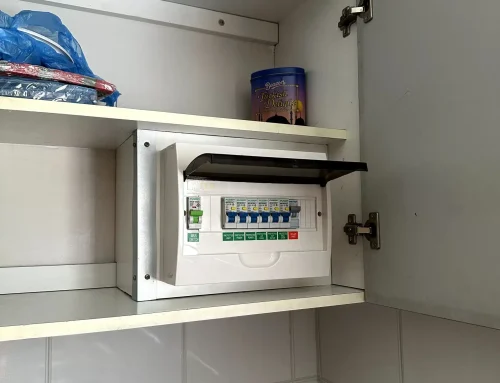
- Switchboard upgrades – Many properties built before 1990 still use ceramic fuse boards without safety switches.
- Ceiling fan and air conditioning installations – Essential for hot Hawkesbury summers, where temperatures regularly exceed 38°C.
- Outdoor and shed wiring – Common on rural blocks needing power to workshops, stables, and irrigation systems.
- Solar and battery system installations – Demand has surged, with NSW adding over 80,000 rooftop solar systems in 2023 alone (Clean Energy Council, 2023).
- Safety inspections – Required for real estate transactions, insurance claims, and due diligence on older properties.
How Do You Know If Your Electrician Is Licensed in NSW?
Every electrician working in NSW must hold a current licence issued by NSW Fair Trading. This is not optional, and it’s not just paperwork. Unlicensed electrical work is illegal under the Home Building Act 1989 and voids home and contents insurance policies in the event of a claim (NSW Fair Trading, 2024). The fines for unlicensed electrical work can exceed $22,000 for individuals.
How to verify a licence:
- Ask for the electrician’s licence number before work starts.
- Check it at the NSW Fair Trading licence check portal.
- Confirm the licence type covers the work you need (contractor licence vs. tradesperson certificate).
[PERSONAL EXPERIENCE] In rural areas like Hawkesbury, it’s common to encounter handymen offering electrical work at attractive rates. The risk isn’t just legal – improperly installed wiring in older timber homes is a fire hazard that may not show up immediately but can smoulder inside walls for months before igniting.
What Should You Expect to Pay for an Electrician in Hawkesbury?
Electrical pricing in the Hawkesbury region sits roughly in line with broader Greater Western Sydney rates, though call-out fees can be higher for rural properties. According to Service Seeking’s 2024 Trades Cost Guide, the average hourly rate for a licensed electrician in NSW ranges from $80 to $130 per hour, with after-hours and emergency rates often doubling that figure (Service Seeking, 2024).
Here’s a rough guide to common job costs in the Hawkesbury area:
| Service | Estimated Cost (inc. GST) |
|---|---|
| Call-out fee (within Hawkesbury township) | $80 – $150 |
| Powerpoint installation (single) | $120 – $200 |
| Ceiling fan installation (existing wiring) | $150 – $250 |
| Switchboard upgrade (standard) | $800 – $2,000 |
| Safety switch (RCD) installation | $180 – $350 |
| Solar system connection (per inverter) | $300 – $600 |
| Emergency after-hours call-out | $200 – $400 |
Prices vary based on travel time, material costs, and job complexity. Always get at least two written quotes for jobs over $500.
Is Your Hawkesbury Home’s Wiring Safe?
Electrical safety is the most urgent reason to call a licensed electrician, and it’s often the one homeowners delay the longest. The Electrical Safety Office reports that approximately 40% of residential fires in Australia are caused by electrical faults, and older wiring is the leading contributor (Electrical Safety Office, 2023). In Hawkesbury, where many homes date from the 1960s through 1980s, outdated wiring is genuinely common.
Warning signs your wiring needs attention:
- Flickering or dimming lights when appliances run
- Burning smell near powerpoints or the switchboard
- Frequently tripping circuit breakers
- Powerpoints that feel warm to the touch
- Old ceramic fuse board (pre-dates safety switches)
Heritage properties in Windsor, Richmond, and Pitt Town often have mixed wiring systems, where original wiring has been partially updated over decades but never fully brought to current standards. This creates hidden fault points that a visual inspection alone won’t catch. A proper electrical audit using an insulation resistance test is the only reliable way to assess these homes.
Why Are Safety Switches (RCDs) So Important in Rural Properties?
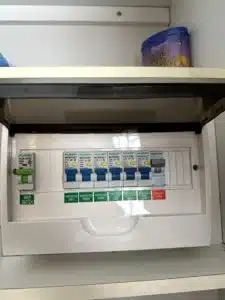
Safety switches, known formally as Residual Current Devices (RCDs), are compulsory on all new residential electrical installations in NSW under AS/NZS 3000:2018. But many rural Hawkesbury properties pre-date this requirement and still run without them. An RCD detects a fault current and cuts power in as little as 30 milliseconds, fast enough to prevent electrocution in most scenarios (Energy Safe Victoria, 2023).
Rural properties face elevated electrical risk for several specific reasons:
- Extension cords and outdoor equipment used around water, wet ground, and machinery
- Outbuildings and sheds often wired independently, sometimes to older standards
- Garden and irrigation systems where underground cables can be struck by post-hole diggers or excavators
- Animal contact with cables in stables and chicken coops
NSW regulations now require RCDs on all new final subcircuits in residential installations. If your property doesn’t have them, this is not a cosmetic upgrade. It’s a safety essential.
What Are the Electrical Needs of Rural Acreages and Small Farms in Hawkesbury?
Rural acreages across Hawkesbury – from Kurrajong Heights to Wilberforce – often require electrical infrastructure well beyond a standard suburban home. A 2023 survey by the Rural Assistance Authority found that 62% of NSW small farm operators had undertaken electrical infrastructure improvements in the previous three years, primarily sheds, irrigation, and solar installations (Rural Assistance Authority NSW, 2023).
Common rural and acreage electrical jobs include:
Three-phase power connections for large machinery, water pumps, and commercial-grade equipment. Three-phase costs significantly more to connect than single-phase but is often necessary for properties running sheds or operating small agricultural businesses.
Submersible pump wiring for dams, bores, and rainwater tanks. These installations require specific waterproofing standards and protection against surge damage, which is common in the Hawkesbury valley during storm season.
Solar and off-grid systems are increasingly popular on larger blocks where high Ausgrid network charges make self-generation economically attractive. Battery storage pairing with solar has become viable for many properties since 2022.
Machinery shed wiring must comply with AS/NZS 3000 and include appropriate protection for dust, moisture, and vibration environments found in agricultural settings.
[PERSONAL EXPERIENCE] Properties in the lower Hawkesbury flood plain have a recurring challenge: electrical systems on ground level are vulnerable to inundation. We’ve seen irrigation control systems, switchboards in garages, and water pump installations destroyed in flood events that could have been mitigated by elevating equipment above the 1-in-100-year flood mark. That’s a conversation worth having with your electrician before installation, not after.
How to Choose the Right Electrician for Your Hawkesbury Property
Choosing an electrician comes down to more than Google reviews. Price matters, but it’s rarely the right starting point. A 2024 Canstar Blue survey found that 71% of Australian homeowners who had negative tradesperson experiences cited poor communication as a contributing factor, ahead of poor workmanship (58%) and hidden charges (49%) (Canstar Blue, 2024).
Here’s a practical checklist before you book:
Verify credentials first
- Active NSW Fair Trading electrical contractor licence
- Public liability insurance (minimum $5 million recommended)
- Workers compensation insurance if they bring staff
Get clarity on the quote
- Written quote, not verbal
- Materials itemised separately from labour
- GST clearly included or excluded
- Conditions under which the price can change
Ask the right questions
- Do they service your specific suburb or rural area?
- Are they familiar with heritage properties or rural infrastructure?
- What is their after-hours emergency availability?
- Do they issue a Certificate of Compliance after the work?
In the Hawkesbury area specifically, response time matters. Electricians based in Windsor or Richmond generally offer faster service than those travelling from Penrith or the Hills District. For rural properties past Kurrajong or towards Wisemans Ferry, local knowledge of road conditions and access tracks is a genuine practical advantage.
Frequently Asked Questions About Electricians in Hawkesbury
How quickly can an electrician respond to an emergency in Hawkesbury? Most licensed electricians serving Hawkesbury offer 24/7 emergency call-outs, with response times typically between 1 and 3 hours depending on location and time of day. Rural properties past Kurrajong Heights or near Wisemans Ferry may experience longer wait times. According to Ausgrid’s fault response data, 87% of urgent residential electrical faults in Greater Western Sydney are attended within 4 hours (Ausgrid, 2023).
Do I need council approval for electrical work in Hawkesbury? Most standard electrical work – powerpoints, lighting, switchboard upgrades – doesn’t require council approval, but a Certificate of Compliance issued by your licensed electrician is mandatory under NSW law. For larger projects like new dwellings, granny flats, or commercial connections, a development application through Hawkesbury City Council may apply. Always check with council if you’re unsure (Hawkesbury City Council, 2024).
Is solar worth it in the Hawkesbury area? Yes, with qualifications. The Hawkesbury region receives an average of 5.1 peak sun hours per day, which is favourable for solar generation (Bureau of Meteorology, 2023). With NSW feed-in tariffs currently between 5c and 10c per kWh and electricity rates exceeding 30c/kWh for most households, a well-sized system typically achieves payback within 4 to 7 years. Battery storage extends savings but adds upfront cost.
What is a Certificate of Compliance and do I need one? A Certificate of Compliance for Electrical Work (CCEW) is a legal document issued by your licensed electrician confirming the work meets Australian standards. It’s required for all prescribed electrical work in NSW and must be submitted to Ausgrid within 7 days of completion. If your electrician doesn’t offer one, that’s a serious red flag (NSW Fair Trading, 2024).
How often should I have my home’s electrical system inspected? The recommendation varies by property age. For homes built before 1980, a full electrical inspection every 5 years is a reasonable baseline. Heritage properties and those that have changed ownership should be inspected before occupancy. Insurance providers are increasingly requesting inspection reports before covering older homes, particularly in high-risk fire areas like much of the Hawkesbury (Insurance Council of Australia, 2023).
Conclusion
Electrical work in the Hawkesbury region sits at the intersection of heritage homes, rural infrastructure, and modern energy demands. Getting it right means working with a licensed professional who understands local conditions, holds current credentials, and communicates clearly before, during, and after the job.
The risks of cutting corners are real. Unlicensed work voids insurance, creates fire hazards, and creates legal liability when you eventually sell. An extra 30 minutes verifying your electrician’s licence and reading a written quote before you commit is time very well spent.
Whether you need a simple powerpoint replaced, a switchboard upgraded before a sale, or a full electrical fit-out for a rural property, the Hawkesbury region has qualified tradespeople who know the local area. Start with a verified licence, a written quote, and a clear timeline, and you’re already most of the way there.